
Seperation and the Soul
There is an old story that human beings were once deeply connected to God, spirit, source — whatever word we choose to use for that greater intelligence that gives life meaning. Then something happened. The connection was broken. We became separated.
Maybe there was rebellion.
Maybe pride.
Maybe grief.
Maybe simply the human condition itself.
Whatever the reason, many people still live with the feeling of that separation now.
You can see it everywhere.
People are more connected technologically than ever before; however, loneliness, anxiety, depression and disconnection continue to rise. We are surrounded by stimulation, information and consumption, yet many people quietly feel empty. Something essential is missing.
Even in a deeply secular society, the language of the soul has never really disappeared.
We speak about soul music. Soul food. A soulless job. A person with a good soul, or a city that has lost its soul.
Even those who feel that religion is not for them often describe moments of awe, deep connection, love, beauty, or grief in ways that go beyond mere logic.
Whatever language we use — soul, spirit, consciousness, heart, energy — most people recognise there is something in us that cannot be reduced to biology alone.
Something alive, relational. Something that longs to belong.
In the UK, we live in a culture still deeply shaped by Judeo-Christian thinking, even if many people no longer identify as religious. Over time, newer influences have entered the conversation — Buddhism, yoga, mindfulness, African spirituality, indigenous wisdom traditions, psychology, neuroscience and trauma theory.
What many people are searching for now is not blind obedience or rigid ideology. They are searching for something meaningful that helps them feel more connected to themselves, each other and life itself.
This is partly why approaches such as Systemic Constellations resonate so deeply with people; they offer something beyond the mundane.
Because they offer relief from striving for perfection.
Because they ease suffering.
And, because they invite us back into a relationship with ourselves, our families, with truth and with reality.
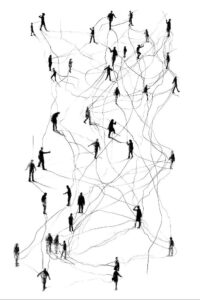
One of the deepest insights within systemic work is that none of us exists in isolation.
We are shaped by the people who came before us.
By what happened in our families.
By what was loved.
By what was denied.
By who belonged.
And by who was excluded.
Many of the struggles people carry are not simply personal failings or individual pathology. Often, they are expressions of unresolved dynamics within larger systems.
A child may carry the grief their parents never spoke about.
A family may repeat patterns for generations without understanding why.
A nation may continue to relive trauma long after the original event has passed.
We are far more interconnected than modern culture often likes to admit.
Even the word “individual” originally meant indivisible.
Not divided.
That is important.
Because many people today are suffering from forms of separation:
separation from family,
separation from community,
separation from nature,
separation from meaning,
and sometimes separation from themselves.
We cannot endlessly divide ourselves from where we came from without consequence.
Our parents live on in us.
Our grandparents live on in them.
And through us, many lives continue forward.
This does not remove personal responsibility. In fact, systemic understanding asks more of us, not less.
It asks us to stop reducing human beings to simple categories of good and bad, victim and perpetrator, right and wrong.
It asks us to become more mature.
More compassionate.
More able to tolerate complexity.
Every family system carries pain as well as love. Every generation inherits both burdens and gifts. And every system develops survival strategies that once made sense, even if they later become limiting.
This is true in families.
In organisations.
In cultures.
And in nations.
The solution is not perfection.
Nor is it endless blame.
The solution begins with greater awareness and greater honesty.
When people begin to see the hidden loyalties, fears and entanglements operating beneath the surface of life, something often softens. Compassion becomes possible. Not sentimental compassion. It becomes mature compassion rooted in reality.
This is one of the reasons I value living maps and systemic approaches so deeply. They allow us to experience interconnection directly rather than only thinking about it intellectually.
We begin to see that exclusion has consequences.
When a family member is denied, forgotten or rejected, the system does not simply move on unaffected. Something remains unresolved. Often, later generations carry what was not acknowledged before.
And belonging extends further than many people realise.
It includes siblings who died young.
Children who were never spoken about.
Previous partners whose loss made later relationships possible.
Victims and perpetrators.
Those who migrated.
Those who were exiled.
Those who sacrificed.
Those who were exploited.
All remain part of the larger human story.
This is not about guilt.
It is about reality.
And reality, when faced with humility, has a surprising capacity to restore balance.
Perhaps this is what many people are truly searching for now.
Not another identity to perform.
Not another ideology to defend.
Not another perfect version of themselves.
What I notice about the people I work with is a way back into relationship with life itself.
A way of living that allows more connection, more truth, more responsibility, more compassion and more soul.
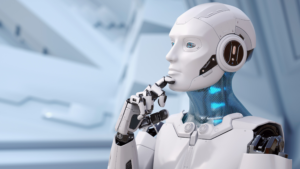
Because without soul — whatever word we choose for it — life eventually begins to feel mechanical.
And human beings were never designed to live as machines.