

I’ve been reflecting recently on why Systemic Constellations works at all.
Not how it works in a technical sense — but why it moves people so deeply, often beyond language, explanation, or belief.
The answer I keep returning to is not methodological.
It is philosophical.
And quietly, it is African.
Phenomenology: meeting experience as it is
Phenomenology, as articulated in European philosophy by thinkers such as Edmund Husserl, Martin Heidegger, and Maurice Merleau-Ponty, asks a deceptively simple question:
What is happening here, as it is lived?
It invites us to pause interpretation, suspend judgement, and meet experience before we explain it.
When practiced with care, phenomenology values:
-
presence over certainty
-
experience over theory
-
meaning as something that reveals itself, rather than something imposed
This orientation has deeply influenced modern therapeutic and systemic practices, including Systemic Constellations.
But phenomenology did not emerge in a vacuum.
African philosophy: where experience was never separated from life
Long before phenomenology became a formal discipline, African philosophies were already grounded in lived, relational knowing.
Across many African worldviews:
-
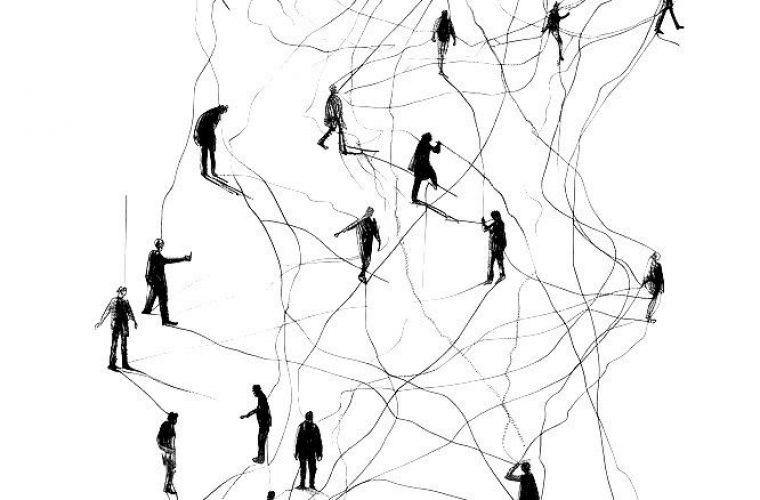
a person is not an individual unit, but a node in a living network
-
experience is not private, but shared across family, ancestry, and land
-
meaning arises between people, not inside isolated minds
Philosophers such as John Mbiti described African time as relational — inclusive of the living, the dead, and the unborn. Life is not linear; it is layered.
This has a quiet resonance with systemic work, where we repeatedly see that what appears “personal” is often ancestral, relational, and unresolved across generations.
In this sense, African philosophy is not pre-phenomenological.
It is post-dual.
It never separated body from meaning, or individual from system, in the first place.
Systemic work as lived philosophy
When we step into a constellation, we do not analyse first.
We do not judge first.
We attend.
We notice sensations, movements, impulses, and emotions as they arise in relationship.
This is phenomenology in action.
And it is also deeply aligned with African relational intelligence — where knowledge is sensed, embodied, and carried collectively rather than owned individually.
What often moves people most in this work is not insight, but recognition:
-
“Something important has been seen.”
-
“Something that was excluded has been acknowledged.”
-
“I am not alone in this.”
These are not techniques.
They are philosophical orientations.
A quiet widening of the field
As systemic work continues to evolve globally, there is an opportunity — and perhaps a responsibility — to recognise the deeper lineages that support it.
Not to romanticise Africa.
Not to appropriate it.
But to acknowledge that many of the principles now being “rediscovered” in Western therapeutic spaces have long existed in African ways of understanding life, belonging, and responsibility.
This is not about replacing one authority with another.
It is about widening the field.
When we allow multiple philosophical roots to coexist — phenomenological, African, systemic — the work becomes less rigid, more humane, and more capable of meeting the complexity of our times.
And perhaps most importantly, it invites us into humility.
Because the deepest movements in healing rarely belong to one culture, one method, or one voice.
They belong to life itself — unfolding, patiently, when the moment is right.