

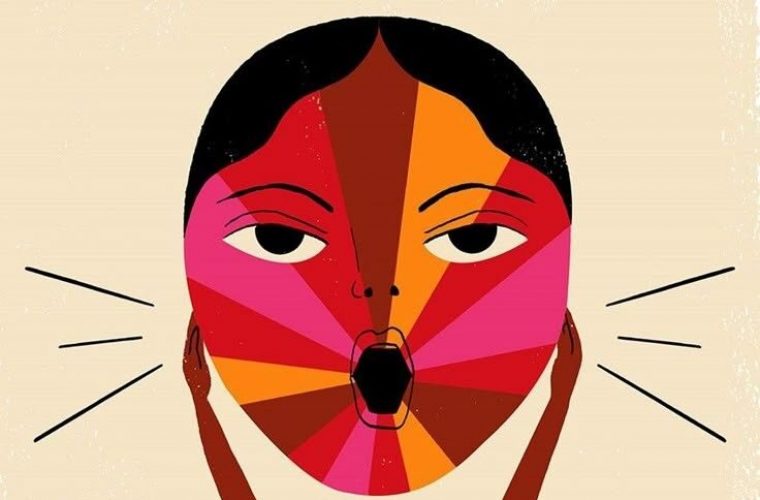
Let’s tell the truth today, properly.
Not the softened version.
Not the socially acceptable one.
The real one.
Women are not only being silenced by men.
They are often silencing themselves.
Before you react—stay with me.
Because this is not about blame.
This is about responsibility.
And there is a difference.
Most women were not raised to tell the truth.
They were raised to:
- keep the peace
- protect the system
- carry what was never theirs
Not because we were weak.
But because it was safer.
Safer to stay quiet
than to interrupt a parent.
Safer to comply
than to risk exclusion.
Safer to absorb
than to confront.
And here is the part we don’t say out loud:
This training often begins with women.
Mothers who cannot tolerate interruption or disruption.
Families that reward compliance.
Systems that quietly punish honesty.
So the pattern is set early.
And it is rehearsed for years.
I can trace it back in my own life.
I was eleven.
Living in the home of my mother’s second marriage.
My half-sister had just been born.
Nothing dramatic happened.
No big moment.
Just a quiet shift.
I no longer belonged in the same way.
At the same time, school was no refuge.
The bullying had become so severe
that even the head teacher was concerned for my safety.
So I did something.
I wrote to a Quaker school
and told them I needed help to leave.
They responded.
I was given a full academic scholarship
and taken out in the middle of the school year.
At the time, I didn’t call it courage.
I didn’t call it strength.
It was simply this:
I knew I could not stay—and I acted.
And yet, in so many other moments in my life,
I have stayed quiet.
That is the pattern.
Not weakness.
But a system that learnt:
When it is too much, I will leave.
Until then, I will endure.
So as an adult, I can sit in rooms where something is not right…
…and say nothing.
Not because I don’t see it.
But because a part of me still believes:
endure first. act later.
And this is where the real work begins.
Because if I do not interrupt that pattern,
I will keep meeting it.
In different men.
In different rooms.
In different forms.
This is the uncomfortable truth:
You cannot outsource your voice.
This is not about becoming aggressive. It does not mean one has to become hard.
It does not mean abandoning your relational intelligence.
It means learning something far more difficult:
how to stay connected—and still say no
In real time.
Not in hindsight.
Not once it’s over.
In the moment your body wants to disappear.
It looks like this:
- “No, that doesn’t work for me.”
- “I’m not comfortable with that.”
- Silence, instead of over-explaining
And yes—there will be consequences.
Some people will not like it.
Some dynamics will shift.
Some relationships will fall away.
That is not failure.
That is reorganisation.
Because the version of you that stayed quiet
was easier to manage.
This is not about blaming men.
It is not about blaming women.
It is about seeing the pattern clearly enough to stop repeating it.
And that begins here:
with the moment you choose to remain with yourself
instead of abandoning yourself to keep the peace.
This is where assertion is born.
Not in volume. Not in force. In presence.
And once you feel it, you won’t be able to unsee it.
If you recognise yourself in this, you also know—this doesn’t change on its own.
Insight is not enough.
If you’ve read this far, you already recognise something in yourself.
Not intellectually.
But in your body.
That moment where you go quiet
when you know you shouldn’t.
That place where you override yourself
to keep things smooth.
This is not something you think your way out of.
It has to be experienced differently, acknowledged and then released.